A First-Timer’s Guide to Visiting an Irish Pub in NYC
New York has no shortage of bars, but an Irish pub occupies its own lane. It is not just a place to order a pint. At its best, it is part neighborhood living room, part dining room, part late-night refuge, and part social crossroads. If you have never stepped into one, especially in a city as fast and layered as New York, the experience can feel slightly mysterious from the sidewalk. The dark wood, the crowded bar, the regulars who seem to know one another, the game on television, the music that may shift from quiet conversation to full-throated singing by the end of the night, all of it can look like a scene already in progress.
That is exactly why first-timers tend to hesitate. They worry about doing the wrong thing, ordering the wrong drink, taking the wrong seat, or missing some unwritten rule everyone else somehow learned years ago. The good news is that a solid Irish pub in NYC is usually less intimidating than it appears. The better ones are built on hospitality. If you walk in with a little awareness and basic pub manners, you will settle in quickly.
What follows is a practical guide for making that first visit enjoyable, whether you are stopping in for one quiet pint on a Tuesday or heading out with friends on a packed Saturday evening.
What makes an Irish pub feel like an Irish pub
Not every bar with a shamrock in the window deserves the label. Some places trade on stereotypes, while others come much closer to the real thing. In New York, the strongest Irish pubs tend to share a few qualities. The room usually has warmth to it, not only in temperature but in texture. You will notice wood, mirrors, brass, framed photos, snug booths, perhaps a long polished bar with a proper rail. The lighting often stays lower than in a sports bar, but brighter than in a cocktail lounge. You should be able to read the menu without feeling like you are under fluorescent office lights.
Just as important is the pace. A true pub invites lingering. You can come in for a quick drink, but the space is designed to hold people for longer than that. One person reads the paper over a lunchtime soup. A group of coworkers share a round after work. Two old friends hold court in the corner booth for three hours. A family comes in on a Sunday for shepherd’s pie and tea. The room can accommodate all of them without feeling like it is serving only one kind of customer.
That flexibility is one reason the Irish Pub NYC scene has lasted. In a city where plenty of venues narrow themselves to a niche, the pub remains broad-shouldered. It can be casual without being careless, lively without requiring a DJ, and familiar without becoming dull.
Picking the right pub for your first visit
Your first experience will depend heavily on where and when you go. This is where many people misread the category. They hear “Irish pub” and imagine one uniform experience. In practice, there are big differences between a Midtown pub that serves office workers and tourists, a Financial District spot that surges at happy hour, a West Village institution with deep local roots, and a Queens neighborhood pub where families and regulars shape the room.
For a first visit, it helps to think about what you actually want. If your goal is conversation, avoid the busiest sports windows and skip the prime Friday rush. If you want the full high-energy atmosphere, then a weekend evening or a major match day may be exactly right. If you care about food, choose a pub with a kitchen people mention for more than “solid bar food.” Some places put serious effort into soda bread, stew, fish and chips, coddle, curry fries, or a Sunday roast. Others are better approached as drinking establishments with a menu attached.
A good first-timer move is to visit early in the evening, around 5:00 to 7:00 p.m., especially on a weekday. You get the room when it still has life but not yet crowd pressure. Bartenders have a little more time. You can look around without feeling in anyone’s way. If the place turns out to be one you love, you can always come back later for a louder night.
The moment you walk in
Most first impressions are formed in the first thirty seconds. Open the door, pause briefly, and take in the room. Look for a host stand if the pub serves dinner in a structured dining section. If there is none, check whether people are seating themselves. In many pubs, especially more casual ones, it is perfectly normal to claim an open table or walk directly to the bar.
If you want food and the dining room is full, the bar may still be your best option. Many New York pub regulars prefer eating at the bar anyway. Service is often faster, and you get a better feel for the place. If you see coats draped over a stool or half-finished pints nearby, assume the seat is taken unless the bartender tells you otherwise.
There is a small urban skill here that matters more than people think. Make eye contact with the bartender, not in an aggressive way, just enough to signal that you are ready and aware. Waving, snapping, or leaning halfway across the taps will make a poor impression in any decent bar, but especially in a busy pub where the staff are juggling ten orders at once. Calm visibility works better than frantic energy.
How ordering works, and what to ask for
At many Irish pubs in New York, you can order in a very straightforward way. If you know what you want, say it clearly. If you do not, ask concise questions. “What do people come here for on draft?” will get you much further than reciting your entire beverage history.
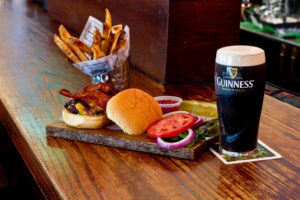
A lot of first-timers https://rowanikso382.tearosediner.net/how-to-find-a-family-friendly-irish-pub-nyc-guests-appreciate assume they need to order Guinness to belong. You do not. Guinness is iconic, and in a well-run pub it can be excellent, creamy, cool, and poured with care. But you are not taking an exam. Plenty of people order lager, ale, cider, whiskey, soda, tea, coffee, or sparkling water. The pub should meet you where you are.
That said, it is worth understanding that not all pints are equal. In a good house, the beer lines are clean, glassware is proper, and the pour is consistent. If you want the classic experience, a stout or Irish lager is a reasonable place to start. If whiskey is more your speed, you can ask for an Irish whiskey neat, on the rocks, or in a simple highball. If you are eating, think about pairing. A stout stands up well to stew and pie. A crisp lager works nicely with fish and chips. Tea after a heavy meal is more common in an Irish pub than many first-timers expect, and often exactly the right call.
Here are a few safe, useful order ideas for a first visit:
- A pint of Guinness or a local stout, if you want the classic pub feel
- An Irish lager or cider, if you prefer something lighter
- A whiskey and soda, if beer is not your thing
- Fish and chips, stew, or shepherd’s pie, if you want a reliable starting point from the kitchen
- Tea or coffee after your meal, especially on a cold day
None of these choices are mandatory. They simply fit the setting naturally and tend to travel well from one pub to another.
The truth about Guinness, and why patience matters
If you do order Guinness, you may notice a bit of ceremony around the pour. People love to argue about this, often with more confidence than accuracy. What matters most is not performative mystique, but consistency. A bartender who knows their draft system and cares about the beer will deliver a better pint than someone leaning heavily on folklore.
A proper stout pour can take longer than a rushed lager. That does not mean every delay is evidence of craftsmanship, but it does mean you should not panic if the bartender sets the glass down for a moment before topping it. If the pub is busy, remember that the staff are also balancing a queue of orders, tabs, and food runners. This is one of those places where New Yorkers who are otherwise impatient often become surprisingly philosophical. The pint arrives when it arrives.
The same principle applies to the room itself. Pubs reward people who settle in. If you walk in demanding speed at every turn, you miss what the place does best.
Food is not an afterthought
One mistake first-timers make is treating the menu like backup. In a strong pub, the kitchen is not decoration. It is central to the experience. Even when the food is simple, it should be satisfying, well-portioned, and honest about what it is. You are not looking for edible confetti or tiny towers of microgreens. You are looking for warmth, balance, and dishes that support a long conversation and another round.
The classics endure because they work. Good fish and chips need a crisp, dry coating and fish that stays moist. Shepherd’s pie should have depth in the filling, not just a blanket of mashed potatoes hiding bland ground meat. Irish stew should taste slow-cooked, not assembled in haste. Brown bread or soda bread can tell you a lot about a kitchen’s seriousness. If a pub gets the bread right, there is usually care elsewhere too.
At brunch or lunch, do not overlook simpler plates. Soup, a sandwich, bangers and mash, or a burger can be the better order depending on the kitchen’s strengths. There is no prize for choosing the most overtly Irish item if the pub is known for something else. Ask. Staff usually know what moves well and what the kitchen executes consistently.
Pub etiquette in New York, which is mostly common sense with sharper edges
An Irish pub in NYC is friendlier than many first-timers expect, but New York bar etiquette still applies. Space is tight, the staff are busy, and the crowd may range from neighborhood regulars to office groups to visitors trying to squeeze six people into a corner built for four.
The easiest way to get it right is to read the room. If people are holding a low, easy volume at 6:00 p.m., do not arrive shouting over one another. If a soccer match is on and everyone is standing three deep at the bar, accept that service will be slower and movement more limited. If there is live traditional music in a snug back room, talking through it at full volume will not endear you to anyone.
A few habits go a long way:
- Open or close your tab clearly, instead of making the bartender guess
- Tip like someone who understands New York service norms
- Do not camp at a tiny two-top for hours during peak dinner unless you are still ordering
- Keep your phone use discreet, especially at the bar
- If you bump into someone, a quick apology fixes almost everything
That last point matters more than people think. Pubs are social spaces built on tiny negotiations of courtesy. Doors get held, stools get shifted, ketchup gets passed, someone squeezes by with a tray, and the evening works because people cooperate without making a production of it.
Talking to regulars, and when not to
Many first-timers romanticize the regular. Sometimes rightly. There is still something wonderful about sitting next to someone who has been coming to the same pub every Thursday for twenty years and can tell you which bartender pours the best pint, which table stays draft-free in winter, and what the neighborhood looked like before three nearby buildings became luxury rentals.
Regulars can be a gift, but they are not tourist attractions. Some are eager to chat. Others came in specifically to avoid chatting. The clue is usually obvious if you pay attention. A person making eye contact, commenting on the match, or responding warmly to a small observation is inviting conversation. Someone buried in a racing form, a paperback, or a deliberately quiet pint probably is not.
If you do strike up a conversation, keep it light at first. Ask whether the kitchen has a standout dish. Ask whether the pub gets especially lively on music nights. If they are from Ireland, resist the urge to treat them like a cultural ambassador responsible for explaining the island to you between sips. Curiosity is fine. Interrogation is not.
Sports, music, and the changing mood of the room
A pub can feel like three different businesses in one day. That is part of its charm. Afternoon may bring quiet lunches and a muted television. Early evening fills with office workers and neighborhood drop-ins. Later, especially on weekends, the room can flip into something much louder and more kinetic.
Sports are often a major driver of that shift. Depending on the pub, you may find Premier League matches, rugby, GAA, Champions League fixtures, or big international tournaments drawing a committed crowd. If you are not there for the game, that does not mean you should avoid the pub entirely. It does mean you should know what you are walking into. A title-deciding match can transform a calm room into standing-room-only chaos before noon.
Live music works differently. In some pubs, a trad session is woven into the room rather than staged above it. That can be beautiful when done well. The musicians may gather in a corner and play with a looseness that feels communal rather than performative. In other spots, music nights are more like event programming, louder and more central. Neither is wrong, but they create different evenings.
The best approach is to check the pub’s rhythm before you go. Not every first visit needs to happen on the busiest, noisiest night the place has all month.
Money, tipping, and the practical details people forget to mention
The mechanics matter, especially in New York. Some pubs are still more cash-friendly than trendier bars, though card payments are standard almost everywhere now. If there is a minimum for cards, it is usually posted. If the room is crowded, starting a tab can save time. If you know you are having one drink and leaving, pay as you go.
Tipping follows normal New York expectations. Bartenders and servers rely on it, and pubs are no exception. If you receive table service for food and drinks, tip accordingly. If you are at the bar for a pint or two, tip as someone who understands local custom, not as someone pretending the city runs on old coins and goodwill. You do not need theatrical generosity, just baseline fairness.
Restrooms in older pubs can be narrow, tucked away, or located downstairs behind a maze of framed photos and one slightly alarming turn. This is less a warning than a rite of passage. If you are wearing a coat in winter, keep your essentials on you rather than slung over a chair. New York is generally safe in busy pubs, but crowded spaces reward a little caution.
What to wear, and how formal the night should be
Most Irish pubs in NYC land firmly in the smart-casual to fully casual range. You rarely need to dress up unless you are heading to a pub attached to a polished restaurant or meeting people after work in a business-heavy part of town. Dark jeans, clean shoes, a sweater, a collared shirt, or a decent jacket will fit almost anywhere. In colder months, expect layers by the door and a bit of heat inside once the room fills.
More important than dress code is attitude. Pubs are not impressed by over-staging. If you arrive treating the place like an ironic theme set, people notice. If you arrive ready to eat, drink, and behave like a normal guest, you are already doing it right.
Going solo versus going with a group
For a first visit, solo can actually be easier. One person can slip onto a barstool, order quickly, and absorb the room. It is also easier to leave whenever you want. If you are curious about the Irish Pub NYC experience itself, rather than simply needing a place to meet friends, going alone for a single pint and a meal is a smart move. You notice more. You hear how the staff interact. You get a better sense of whether this is a place you would return to.
Groups have their own advantages, but they come with logistics. Four people can usually make a pub work without much fuss. Eight people at 7:30 on a Friday may need a plan, and maybe a reservation if the pub takes them. Larger groups also change the energy of the visit. You may end up spending most of your time managing the group rather than experiencing the pub. That is not necessarily bad, just different.
The small signs you found a good one
A worthwhile pub reveals itself in details that do not show up in glossy photos. The bartender remembers who ordered the whiskey and who ordered the lager without writing it down. The food arrives hot. The music, if there is music, suits the room instead of smothering it. A regular greets the server by name and still tips properly. The television is on, but not so loud that every table has to compete with it. Someone comes in alone and does not look out of place.
You may also notice something harder to define, a lack of strain. The pub is not trying too hard to prove its authenticity every second. It does not need to. The best places are confident enough to let ordinary hospitality carry the night.
That confidence is often what first-timers remember. Not the perfect pour, not the decorative signs, not even the famous dish, though those things help. What stays with you is the feeling that the room had space for you without demanding performance from you. In a city that can be transactional and hurried, that is not a small thing.
If your first visit feels awkward
Sometimes the first pub simply is not your pub. Maybe it is too loud, too touristy, too sports-driven, too expensive, too cramped, or too polished for what you had in mind. That does not mean the category failed you. It means New York is large, and pubs reflect their blocks, their owners, and their clientele.
Try a different neighborhood. Try a quieter hour. Sit at the bar instead of a table, or the reverse. Order food if you only had drinks the first time. Come on a rainy afternoon when the room has softened. The same person who feels overwhelmed in a packed Midtown pub on St. Patrick’s week may find a Sunday evening local in Brooklyn or Queens deeply appealing.
The point of a first visit is not to pass a test. It is to begin learning what kind of pub suits you. Once you find the right one, the whole format makes sense very quickly. You stop overthinking the order. You know where to stand while waiting for a friend. You understand when the room wants noise and when it wants ease. Eventually, if you are lucky, someone newer than you walks in and hesitates at the door, and you realize you know exactly what to tell them.
Start simple. Choose a pub with a good reputation, go at a manageable hour, order something you genuinely want, and give the place time to meet you. That is the real first-timer’s guide. Not performance, not mythology, just a little attention and a willingness to settle into the room. In New York, that is often how the best nights begin.
Hibernia Bar
401 W 50th St
New York, NY 10019, United States
Phone: +1 212-969-9703
FAQ About Irish Pub NYC
What is the best Irish pub in NYC?
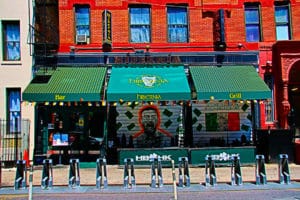
The best choice depends on your location and preferred atmosphere. Hibernia Bar is a neighborhood Irish pub in Hell's Kitchen offering Guinness, Irish whiskey, pub food, and sports viewing.
Where do Irish people go in NYC?
New York's Irish community gathers in many neighborhoods and venues. Hibernia Bar welcomes Irish expats, local residents, and visitors at 401 W 50th St, just off Ninth Avenue.
Where can I watch GAA games in New York?
Hibernia Bar lists GAA among the sports it shows. Call +1 212-969-9703 to confirm coverage and opening times for a particular match before visiting.
What is the difference between a bar and a sports bar?
A sports bar emphasizes televised games and a shared viewing atmosphere. Hibernia combines sports viewing with the food, drinks, and hospitality of a neighborhood Irish pub.